Three Types of Custom Orthotics and Who Should Use Them
Are you suffering from foot or heel pain that makes daily activities difficult? Foot orthotics may be the solution you're looking for. Designed to support and correct foot function, orthotics can relieve pain and improve overall foot health. In this article, we'll discuss the 3 main types of orthotics and who they are suitable for.
Quick Summary
- The 3 different orthotic types are:
- Rigid orthotics: These provide stability and help prevent uncomfortable movements. They are made from hard materials.
- Soft orthotics: These provide extra cushioning for those who need additional comfort. They are made from soft materials.
- Semi-rigid orthotics: These provide a balance between stability and cushioning. They are made from a combination of hard and soft materials.
- Orthotics are custom-made devices prescribed by podiatrists to address various foot problems.
- Different types of orthotics offer a range of functions, from cushioning and support to shock absorption and enhanced sports performance.
- Consulting a healthcare professional is necessary to determine the most suitable orthotic type for an individual's needs, enabling pain relief, better balance and alignment of the feet, and injury prevention.
The Basics of How Orthotics Work
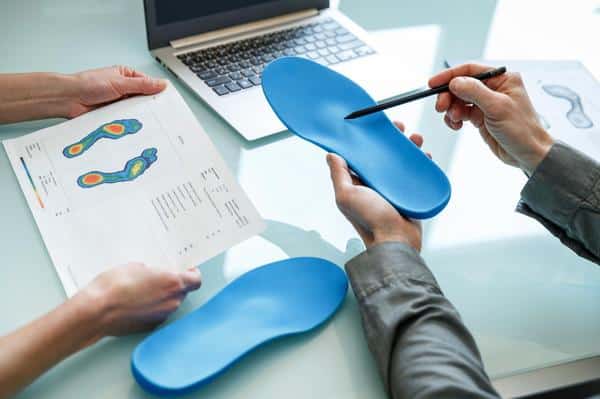
Also known as foot orthotics, orthotics are specially designed devices that provide support, reduce discomfort, and improve foot function. What orthotics do is reduce pressure on a painful point and distribute it across the rest of your foot. They also modify your gait to place less stress on your foot, so you don't start the day with pain and inflammation. In essence, what orthotics do is help you heal. You can learn more about how custom orthotics work here.
These products are made by casting your feet or creating digital molds using advanced computer-assisted 3D imaging technology. At Tabanlık Dünyası, the process begins with a comprehensive biomechanical examination. This examination includes a detailed analysis of your gait, foot structure, and alignment. This thorough assessment allows us to understand the nuances of your foot function and enables us to design custom orthotic insoles tailored specifically for you.
Benefits of Using Custom Orthotics
Mass-produced orthotic products inherently take a "one size fits all" approach, which may not provide a perfect fit and could even worsen the problem. Your body is unique, and so are your feet. After years of living the way only you have lived and moving the way only you move, it makes perfect sense that your feet function a little differently from everyone else's.
Custom orthotic insoles – like those made at Tabanlık Dünyası – are made specifically for you, your feet, and the issues you experience.
Custom orthotic insoles can provide the following benefits:
- Improved biomechanics
- Pain relief
- Prevention of foot problems
- Improved balance and stability
- Foot realignment
- Prevention of foot injuries
- Improved overall foot health
Orthotics can manage and improve a variety of foot conditions, including:
- Plantar fasciitis
- Flat feet
- Arthritis
- Bunions
- Rheumatoid arthritis
- Heel pain and heel spurs
- Arch pain
- Metatarsalgia
- Morton's neuroma
- Diabetes-related complications such as diabetic foot ulcers
- Osteoarthritis
- Shin splints and sports injuries
Custom Insoles
Reduce the load on your feet and prevent injuries with our custom insole service.
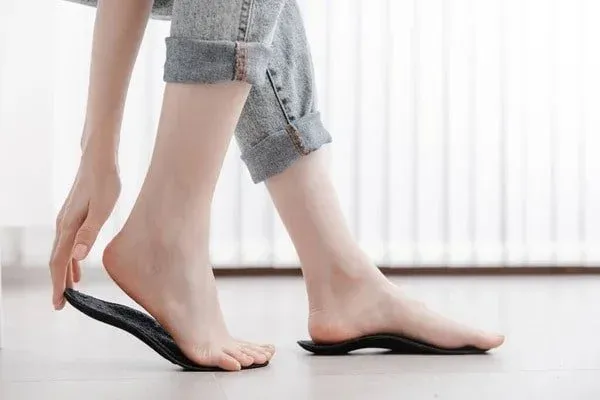
Are you dealing with any of the following…
- Do the soles of your feet/heels really hurt?
- Do your ankles, knees, or hips ache persistently after walking?
- Are your arches very flat?
- Do you frequently sprain your ankles (or do they frequently give way)?
- Can't find shoes that fit your feet properly?
- Do the edges of your shoes wear out quickly?
Then maybe we can help!
The foundation of the body starts with the feet. Ensuring the body is properly supported is very important for increasing comfort, boosting performance, and reducing the risk of injury. However, approximately 75% of the population unknowingly experiences some form of body imbalance. This can lead to problems later in life, and insoles may be one solution that can help!
**Meet Custom Insoles.** At Tabanlık Dünyası, we use modern analysis technology to accurately analyze and measure your feet in 3D, and we produce a medical-grade insole to support your body. No two feet are alike — that's why a custom option is the best choice!
What Are Custom Orthotics?
Definition:
Custom orthotics are prescription medical devices designed to support, align, prevent or correct deformities of the foot, or improve foot function.
Types:
Rigid: Made from hard materials for structural correction. Semi-rigid: Combines support and flexibility. Soft: Cushioned, reduces pressure and absorbs shock.
- Rigid: Made from hard materials for structural correction.
- Semi-rigid: Combines support and flexibility.
- Soft: Cushioned, reduces pressure and absorbs shock.
2. Indications for Custom Orthotics
Common Conditions:
Plantar fasciitisFlat feet (pes planus)Excessive pronation or supinationAchilles tendinopathyPatellofemoral pain syndromeSI joint dysfunctionDiabetic foot ulcersLeg length discrepancy
- Plantar fasciitis
- Flat feet (pes planus)
- Excessive pronation or supination
- Achilles tendinopathy
- Patellofemoral pain syndrome
- SI joint dysfunction
- Diabetic foot ulcers
- Leg length discrepancy
Referral warning signs:
Chronic pain unresolved by rehabilitationSignificant biomechanical abnormalitiesRecurrent stress-related injuries
- Chronic pain unresolved by rehabilitation
- Significant biomechanical abnormalities
- Recurrent stress-related injuries
3. Biomechanical Assessment
What to assess:
Static posture (standing)Dynamic gait (walking/running)Footwear analysisRange of motion (ankle, subtalar joint, 1st metatarsophalangeal joint)Muscle strength (intrinsic muscles, tibialis posterior, etc.)
- Static posture (standing)
- Dynamic gait (walking/running)
- Footwear analysis
- Range of motion (ankle, subtalar joint, 1st metatarsophalangeal joint)
- Muscle strength (intrinsic muscles, tibialis posterior, etc.)
Tools:
Gait observationPressure plate / foot scannerFunctional tests (e.g., single-leg balance, squat)
- Gait observation
- Pressure plate / foot scanner
- Functional tests (e.g., single-leg balance, squat)
4. Understanding Orthotic Design
Components:
Shell (main body)Posting (forefoot/rearfoot angles)Top cover (comfort layer)Extensions or lifts
- Shell (main body)
- Posting (forefoot/rearfoot angles)
- Top cover (comfort layer)
- Extensions or lifts
Materials Matter:
EVA: lightweight, shock-absorbingPolypropylene: durable, rigidFoam/cork: cushioning and moldability
- EVA: lightweight, shock-absorbing
- Polypropylene: durable, rigid
- Foam/cork: cushioning and moldability
5. 🤝 Physiotherapy-Podiatry-Orthotics Collaboration
When to refer (e.g., diagnostic uncertainty, complex cases)What information to provide (diagnosis, goals, activity level)How to interpret reports and recommendations
- When to refer (e.g., diagnostic uncertainty, complex cases)
- What information to provide (diagnosis, goals, activity level)
- How to interpret reports and recommendations
6. 🧩 Orthotics in Rehabilitation
Introduce orthotics gradually (break-in program)Use alongside: ◦ Intrinsic foot muscle strengthening ◦ Manual therapy and joint mobilization ◦ Neuromuscular re-education ◦ Gait retrainingReassess at 4–6 weeks
-
Introduce orthotics gradually (break-in program)
-
Use alongside:
-
◦Intrinsic foot muscle strengthening
-
◦Manual therapy and joint mobilization
-
◦Neuromuscular re-education
-
◦Gait retraining
-
-
Intrinsic foot muscle strengthening
-
Manual therapy and joint mobilization
-
Neuromuscular re-education
-
Gait retraining
-
Reassess at 4–6 weeks
7. 📊 Outcome Evaluation
Patient feedback:
Pain reduction (VAS, NPRS)Comfort and function in daily activities and sports
- Pain reduction (VAS, NPRS)
- Comfort and function in daily activities and sports
Objective measures:
Gait changes (step length, foot strike)Functional improvements (6-minute walk test, SLS, hop tests)
- Gait changes (step length, foot strike)
- Functional improvements (6-minute walk test, SLS, hop tests)
8. Addressing Common Misconceptions
“Orthotics weaken the feet” – Only when used without a strengthening program.“They work instantly” – Most require a 2–4 week break-in period.“One size fits all” – Customization is key for long-term results.
- “Orthotics weaken the feet” – Only when used without a strengthening program.
- “They work instantly” – Most require a 2–4 week break-in period.
- “One size fits all” – Customization is key for long-term results.